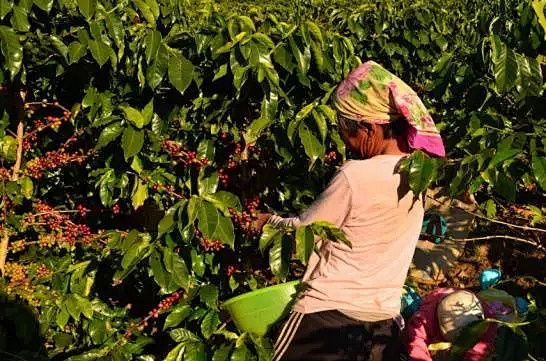


In the first quarter of 2026, China’s main coffee-producing regions saw a series of positive developments. According to customs data, coffee exports from Pu’er, Yunnan reached RMB 110 million in the first three months of the year, shipped to 19 countries and regions including Germany and Russia. Meanwhile, the first China-Laos Railway dedicated coffee bean freight train departed from Ning’er Freight Station, heading directly to Xiamen – effectively linking Yunnan’s growing regions with the manufacturing and logistics hub of the southeastern coast.
Exports and Branding Gain Momentum
In the 2025 harvest year, Yunnan Province had 1.465 million mu (approx. 97,700 hectares) under coffee cultivation, producing 170,700 tonnes of green coffee. The agricultural output value surged to RMB 8.66 billion, a year-on-year increase of 77.8%. Core producing areas performed particularly well: Pu’er coffee reached 3,000 tonnes in the 2025/2026 season, up 42.9% from the previous year, with Grade 1 beans accounting for over 80% of total output. Lincang City now has 290,000 mu (approx. 19,300 hectares) of coffee plantations, benefiting 63,000 farming households, with an annual output of 25,000 tonnes and an agricultural value of RMB 992 million.
Alongside quality improvements, branding efforts took a major step forward. On 7 April, a press conference in Kunming unveiled the “2026 Yunnan Coffee” promotional logo and slogan, featuring the Yunnan snub-nosed monkey as a key visual – marking the shift of Yunnan coffee from raw commodity supplier to a recognized regional brand.
International Origins: Brazil’s Drought and Production Outlook
Looking globally, weather challenges and shifting expectations are reshaping supply chains. As the world’s largest coffee exporter, Brazil’s south-central region continues to face severe drought, with rainfall in São Paulo and Minas Gerais – key coffee belts – falling to less than half the historical average. However, Brazil’s National Supply Company (CONAB) has projected that, thanks to expanded planted area and improved flowering in some zones, the country’s 2026 coffee output could rise by 17.2% year-on-year to a record 66.2 million bags.
Trade Policy Benefits African Green Coffee Imports
On the trade policy front, China has announced that effective 1 May 2026, it will apply zero-tariff treatment to all African countries with which it has diplomatic relations. This will significantly boost the price competitiveness of green coffee from Ethiopia, Kenya, and other African origins in the Chinese market. Recently, a bonded warehouse in the Dangtu Economic Development Zone (Anhui Province) received green coffee shipments from Ethiopia, Colombia, and elsewhere, enabling rapid customs clearance and lowering warehousing and logistics costs for importers.